Sunday, December 21, 2014

"Do Not Go Gentle into That Good Night" by Dylan Thomas


"Do Not Go Gentle into That Good Night" by Dylan Thomas

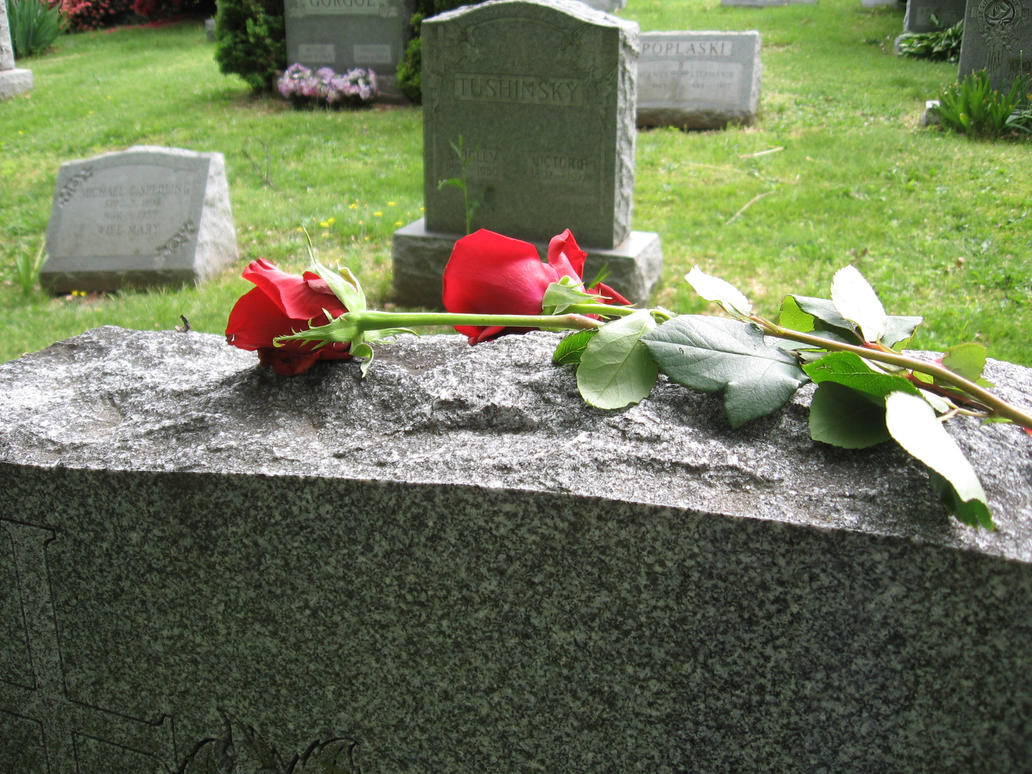
Dylan Thomas died at the early age of 39. He was both a writer and a poet who at the age of 16 became a journalist. He was a Welsh poet and was said to have been one of the most important in the 20th century.


Do not go gentle into that good night,
Old age should burn and rage at close of day;
Rage, rage against the dying of the light.

Though wise men at their end know dark is right,
Because their words had forked no lightning they
Do not go gentle into that good night.

Good men, the last wave by, crying how bright
Their frail deeds might have danced in a green bay,
Rage, rage against the dying of the light.

Wild men who caught and sang the sun in flight,
And learn, too late, they grieved it on its way,
Do not go gentle into that good night.

Grave men, near death, who see with blinding sight
Blind eyes could blaze like meteors and be gay,
Rage, rage against the dying of the light.

And you, my father, there on the sad height,
Curse, bless me now with your fierce tears, I pray.
Do not go gentle into that good night.
Rage, rage against the dying of the light.


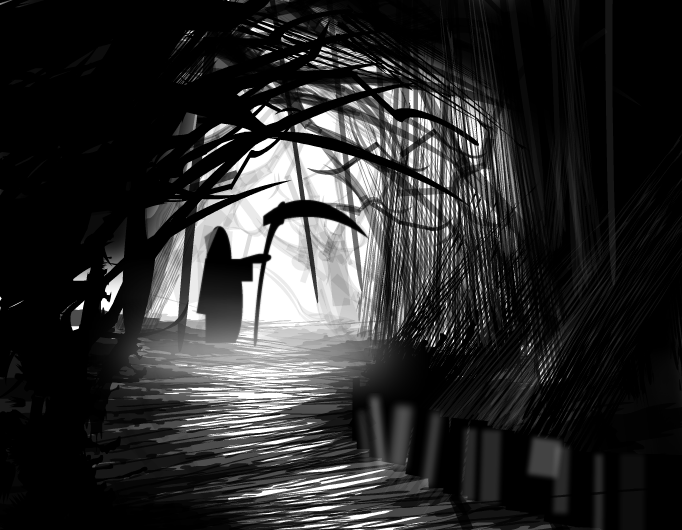
Thomas conveys a very emotional message in this poem. He asserts that old men at the ends of their lives should resist death as strongly as they can. In fact, they should only leave this world kicking and screaming, furious that they have to die at all. At the end of the poem, we discover that the speaker has a personal stake in this issue: his own father is dying. Although his message is very passionate he doesn't stray away from his very strict writing form. He divided the poem into six stanzas, each three lines a piece, and all containing iambic pentameter. The poem throughout has an A B A rhythm scheme, except for the final lines of each stanzas. These lines are either “Rage, rage against the dying of the light” or “Do not go gentle into the good night.” They follow their own pattern, once more helping the reader to understand Thomas’ point. By ending the each lines with either of these sayings the use of repetition adds to the idea of not giving into the temptation of death. This strict form of three lines drives home his beliefs in death and are constantly being reinforced. Although he is passionate his tone does not come off at someone who is intensely angry and aggressive. He is more trying to convey his point and persuade others to believe in what he is saying. Emphasizing his point once more, Thomas adds both of his infamous sayings to the end of the last stanza. By adding both of these, it adds an extra line to the last stanza separating how one reads it from the rest. 

Sunday, November 30, 2014

"Wedding-Ring," By Denise Levertov

"Wedding-Ring," By Denise Levertov


 Denise Levertov was a British-born American poet. She was born and grew up in Ilford, Essex. Throughout her life she created a wide variety of poetry that portrayed her beliefs as an artist and humanist.


Wedding-Ring
My wedding-ring lies in a basket
as if at the bottom of a well.
Nothing will come to fish it back up
and onto my finger again.
                                      It lies
among keys to abandoned houses,
nails waiting to be needed and hammered
into some wall,
telephone numbers with no names attached,
idle paperclips.
                      It can’t be given away
for fear of bringing ill-luck
                      It can’t be sold
for the marriage was good in its own
time, though that time is gone.
                      Could some artificer
beat into it bright stones, transform it
into a dazzling circlet no one could take
for solemn betrothal or to make promises
living will not let them keep? Change it
into a simple gift I could give in friendship?


When one thinks of a marriage and a wedding, what is the first thing that comes to mind? Unity. There is no greater symbol for unity than wedding rings. They represent the union of two in marriage. The two rings create a bond between the two. Worn at all times to show commitment and the dedication that one has to each other. Her wedding ring is lying at the bottom of a basket, and she uses the simile to say that it is like it’s at the bottom of the well. Symbolizing how far away she wants the ring to be kept from her, the “out of sight, out of mind” mentality. This image shows the darkness and emptiness of the marriage the ring symbolizes.  She creates metaphors of how her ring is as important to her now as abandoned houses, nails waiting to be needed and hammered into some wall, telephone numbers with no names attached, and idle paperclips”. Nothing can be done with it now, because she doesn't want to pass on bad luck to anyone else, and she cannot sell it because at one time it brought her happiness, he brought her happiness. In the last few lines she explains how one could beat bright stones into it and transform the ring, but then the only significance it could bring would be friendship.   But now, all she has is the broken symbol of unity, a reminder of the emptiness she feels, the heart break she experienced, the love she once had, and the future she had hoped for and how now that was merely a dream. 

Saturday, November 29, 2014

Slim Cunning Hands by Walter De La Mare

Slim Cunning Hands by Walter De La Mare


Walter De La Mare writes about ideas such as death, emotions, fantasy worlds, and death. He would be classified as a modern romantic poet. Alongside with writing poetry he also writes novels with the same complex ideas, most dealing with death.


Slim Cunning Hands
Slim cunning hands at rest, and cozening eyes-
Under this stone one loved too wildly lies;
How false she was, no granite could declare;
Nor all earth's flowers, how fair.


Death and deception are the ideas that De La Mare used to write this short poem. If you don’t read carefully this poem can be easily misinterpreted for something mellower and less passionate. This poem expresses the loss of a women and the large impact she made on the man. As we read the poem we get the sense that that impact was not the best. The women in his eyes is not described as a typical love poem about the loss of a love you, he portrays her the exact opposite way. De La Mare is very talented to able to express these deep and passionate feelings in only a short poem with five lines. Strong diction and very clever descriptions of the women give us much more insight and add underlying details to the poem. The first line describes the women as a clever liar with the use of the words "cunning" and "cozening". The next lines explores her death, as she know lies under the stone. Wildly is used to describe the women, she lies dead under the concrete stone and is still being described as wild, or uncontrollable. These distinct words create a vivid description in my mind of how even though the women is very much dead and barricaded under a cemented stone that is not stopping her from defying the rules and acting rebellious. He might be saying that even though she’s dead he wouldn’t be surprised if she fought her way out because of how conniving she was. Following that line he talks about the granite and the flowers, these items are symbolic to a grave site. He’s saying that nothing will give away what kind of a person she was. Nothing. By using granite and flowers, he creates in our mind the picture of a typical grave site and how you gaze for yards and yards at the exact same sight, a gravestone and a flower placed along side. Her true personality will never be known, because now she is just another one of the stone heads in the field.

Wednesday, November 26, 2014

"The Night Wind" by Emily Bronte 

Emily is only remembered for her only novel, Wuthering Heights, now considered a classic of English literature. Emily, an English poet and novelist is the third eldest of her four siblings. She wrote under the pen name Ellis Bell because she was not fond of the name Emily.


 In summer's mellow midnight,
A cloudless moon shone through
Our open parlour window,
And rose-trees wet with dew.

I sat in silent musing;
The soft wind waved my hair;
It told me heaven was glorious,
And sleeping earth was fair.

I needed not its breathing
To bring such thoughts to me;
But still it whispered lowly,
How dark the woods will be!

"The thick leaves in my murmur
Are rustling like a dream,
And all their myriad voices
Instinct with spirit seem."

I said, "Go, gentle singer,
Thy wooing voice is kind:
But do not think its music
Has power to reach my mind.

"Play with the scented flower,
The young tree's supple bough,
And leave my human feelings
In their own course to flow."

The wanderer would not heed me;
Its kiss grew warmer still.
"O come!" it sighed so sweetly;
"I'll win thee 'gainst thy will.

"Were we not friends from childhood?
Have I not loved thee long?
As long as thou, the solemn night,
Whose silence wakes my song.

"And when thy heart is resting
Beneath the church-aisle stone,
I shall have time for mourning,
And THOU for being alone."


It's a summer night and the moon is shining bright in the sky. There is nothing in the sky but the large and abundant moon that brings so much light. You can feel the coolness of the summer night. "In Summer's mellow midnight, a cloudless moon shone through"-The author's description of the moon is extremely soft, showing that she is content with her surroundings and that she is enjoying herself. She is in a state of relaxation. This feeling of contentment is almost as if she is in a dream. Although there is only one person in this poem, the night wind is acting like a second speaker telling her that "Heaven was glorious, and sleeping Earth was fair." She is alone, staring off into the night. The night wind represents the soul of nature, the soul that gives life to all the living. It sweeps through the air breathing life into all the living. She is fixed on the sight she is seeing as she gazes out her window. She daydreams and then beings to question her sanity. She knows that is foolish to have imaginations. She wants to the Night Wind that is breathing life into everything to leave because she wants to resist the temptation of it breathing life into her fantasies. She tells us that, “Thy wooing voice is kind, But do not think its music it has power to reach my mind”.  She doesn’t want it to take over. She wants to be awaken before her wildest of dreams become realities. 

Thursday, November 13, 2014

"She Dwelt among the Untrodden Ways" - by William Wordsworth 

William Wordsworth  British poet, credited with ushering in the English Romantic Movement with the publication of Lyrical Ballads in 1789. William was born in Cumberland in the year 1770 and died 80 years later in 1850.


"SHE DWELT AMONG THE UNTRODDEN WAYS"

          SHE dwelt among the untrodden ways
            Beside the springs of Dove,
          A Maid whom there were none to praise
            And very few to love:

          A violet by a mossy stone
            Half hidden from the eye!
          --Fair as a star, when only one
            Is shining in the sky.

          She lived unknown, and few could know
            When Lucy ceased to be;                                   
          But she is in her grave, and, oh,
            The difference to me!

This passage by Wordsworth is a perfect example of speakers voice. He creates this girl,
or women who is alone in solidarity with really no one to comfort or support her. The details given about her are very faint, we only really are aware of her name and that she ends up dying. We don't know even know if she's young or old. By Wordsworth not giving us lots of details about "Lucy" portrays how the speaker felt about her, the persona that he is trying to convey throughout the poem. The focus is not supposed to be on her, but more as how the speaker feels about her. Having extra information and specific details about her would take away from the personas voice, by forcing us to focus on minor details that wouldn't be relevant the main idea of the poem. The title tells us that she would take the road less taken, in lameness words, she was different. She didn't succumb to others peer pressures, she did her own thing and lived for her self and not for others, according to the persona of the speaker. When she died the speaker is extremely sad. Wordsworth ends the passage with a feeling of speechlessness, as a result the speaker can only can reply with the word "oh". This entire poem was built to show the speakers feelings toward the girl, and represents grief very powerfully. Wen analyzing poetry and considering the speaker, it is extremely important to recognize the character they are portraying. In this poem, the persona is someone who is grieving the death of what we know of a shy, quint women who was unrecognized by most, but cherished by the speaker. 

Monday, November 3, 2014

"Barbie Girl"-Marge Piercy

Marge Piercy 

 She was born into a small family affected by the depression in 1936.  During this time the economy was going through a depression, and because of this she accredits her becoming a poet to her mother.  She described her mother as an  imaginative and independent women.  These are traits of women Piercy often conveys in her poetry.


Barbie Doll


This girlchild was born as usual
and presented dolls that did pee-pee
and miniature GE stoves and irons
and wee lipsticks the color of cherry candy.
Then in the magic of puberty, a classmate said:
You have a great big nose and fat legs.

She was healthy, tested intelligent,
possessed strong arms and back,
abundant sexual drive and manual dexterity.
She went to and fro apologizing.
Everyone saw a fat nose on thick legs.

She was advised to play coy,
exhorted to come on hearty,
exercise, diet, smile and wheedle.
Her good nature wore out
like a fan belt.
So she cut off her nose and her legs
and offered them up.

In the casket displayed on satin she lay
with the undertaker's cosmetics painted on,
a turned-up putty nose,
dressed in a pink and white nightie.
Doesn't she look pretty? everyone said.
Consummation at last.
To every woman a happy ending.

Piercy opens up her poem taking about a normal childhood girl, playing with dolls, putting on makeup, and wanting to do chores like her mother, but things change for the girl. Puberty.  Piercy opening up the poem by talking about a typical little girl which everyone relates to changes instantly.  The tone of the poem goes from friendly and inviting to almost shocking as the little girl is told she has "a great big nose and fat legs" something every girl wants to hear, not!  In the next stanza Piercy mocks society.  She paints the picture for us of a normal, healthy girl who succumbs to society pressure of how she looks.  She was told one that she had imperfections and apologizes for them anywhere she went. Again mocking the ideal image of a women, the image society often perceives. Piercy's explains how the girl had to smile and exercise, she might as well have said wore red lipstick and eat your vegetables.  The pressure was too much and the girl cut off her insecurities, her nose and legs.  She couldn’t take it one more second. Piercy creates the image of the girl laying in her casket on satin sheets dressed in all pink and white, as if she were a Barbie instead of a human being.  But what about her nose that was cut off? Of course the undertakers had perfectly constructed a putty one to fill the place, hence the perfectly constructed.  Even on her literal deathbed she was being critiqued.  In the end everyone thinks she looks like a “perfect girl”, “consummation at last”. The girl dying is the epitome of Piercy’s message in this poem.  She explains how the pressure to be perfect, the act a certain way, or to look a certain will can kill us both figuratively and literally. Piercy put a lot of time into this poem an it is easily noticeable.  Her deep feminist message is conveyed heavily through satire and irony. It’s extreme that the girl was so insecure about her legs that she cuts them off, but it plays on the satirical effect and adds a sense of shock (irony) to the story. Piercy also separates the stanzas into the girl’s life.  By doing this, it is almost as if we are reading a story book. Each stanza a new chapter of the girl’s journey through life.        

"A Found Poem"-Kaxine Kumin


"A Found Poem" by Maxine Kumin
Maxine Kumine was born an American poet and author born in 1925, and died in February of 2014 at the age of 88.  She was appointed Poet Laureate Consultant in Poetry to the Library of Congress in 1981. She has received many awards in her life including  the Eunice Tietijens Memorial Prize for Poetry in 1972, and the Pulitzer Price for Poetry in 1973. 

Whenever I caught him down in hew stall, I'd approach.
At first he jumped up the instant he heard me slide
the bolt. Then I could get the door open while
he stayed lying down, and I'd go in on my hands 
and knees and crawl over to him so that
I wouldn't appear so threatening. It took
six or eight months before I could simply walk in
and sit with him, but I needed that kind of trust.

I kept him on a long rein to encourage him 
to stretch out his neck and back. I danced with him
over ten or fifteen acres of  fields with a lot
of flowing from one ttransition to another.
What I've learned is how to take the indirect route.
That final day I felt I could have cut
the bridle off, he went so well on his own.

Kumin in this poem paints for us the art of writing a poem. To help convey her message she uses the analogy of horse growing up and progressing into adult hood, often known to her as "the final day I could cut the bridle off." When first begging to write poetry Kumin takes the process slow, she doesn't want to jump right in and throw word vomit on the page, she wants a well constructed piece. The moment she doesn't take the time to think and reflect on her poetry she'll awake the horse, or loose the reader. When approaching the horse she crawls on her hands and knees, she does the same for her reader.  She wants to seem relate-able and on the same level with them. It took six to eight months before she was comfortable enough to walk in and sit down with the horse. This time was she spent editing and perfecting her piece until finally she was able to sit down and feel satisfied. Her being able to sit down with the horse after 6 or 8 months shows an immense amount of trust. In her poetry she wants to build a relationship with the reader.  She doesn't want her work to be one dimensional, she wants it to have deeper meaning, passion, enthusiasm and a sense of commitment, just as she was committed to becoming familiar with the horse, she's committed to her audience. But her final revisions aren't over with, she keeps the horse on a long rein and dances with him.. They dance and dance over acres of land.  Kumin although is satisfied with her piece, is not fully satisfied. She works with it again and again, revisingrewriting, and perfecting.  The day has come that the horse must run free, the bridle must be cut and he let be. As the horse runs, so must her piece, it's time to let the world see her creation.  After much dedication, commitment, and passion her complete work is ready for the critiquement of the public.  It is ready, and so is she!